
WELCOME BONUS 300%
UP TO €2000 + 100
FREE SPINS
UP TO €2000 + 100
FREE SPINS
Home → Blackjack
Blackjack at Surge Casino
Insurance vs Even Money When You Hold Blackjack
Blackjack Insurance, played with six to eight decks, carries an RTP of 92.53% and a house edge of 7.47%, where the house edge is the average share of each stake the casino keeps over the long run. The side bet allows up to 50% of the main bet when the dealer shows an ace and pays 2:1, yet basic strategy always declines it except for card counters at a true count of at least +3. On a €10 main bet the full €5 insurance stake costs about €0.37 per round on average at that 7.47% edge. With a single deck the edge falls to roughly 5.88%, so the same side bet is less punishing there.
Even money on a player blackjack is the same wager as insurance in disguise, so the 92.53% RTP and 7.47% house edge apply to it just as they do to the declared side bet. Taking even money locks in a 1:1 return on the blackjack instead of the 3:2 payout that pays €15 on a €10 stake, a difference of €5 on that single hand. Declining both keeps the 3:2 payout intact and avoids the 7.47% edge on the side stake. Insurance pays 2:1, but over hundreds of thousands of rounds that ratio cannot overcome the 7.47% house edge.
The comparison is stark against the main game: Blackjack Liberal Vegas Strip returns 99.72% with a house edge of just 0.28%, while the insurance side bet returns 92.53%. That gap of 7.19 percentage points is the cost of insuring a hand, and it applies on top of whatever the underlying blackjack variant already charges. A player staking €100 in total on insurance stakes would, on average, see about €7.47 retained by the casino across those rounds. The exception is a card counter at a true count of at least +3, where the maths of the remaining deck can briefly favour the 2:1 payout.
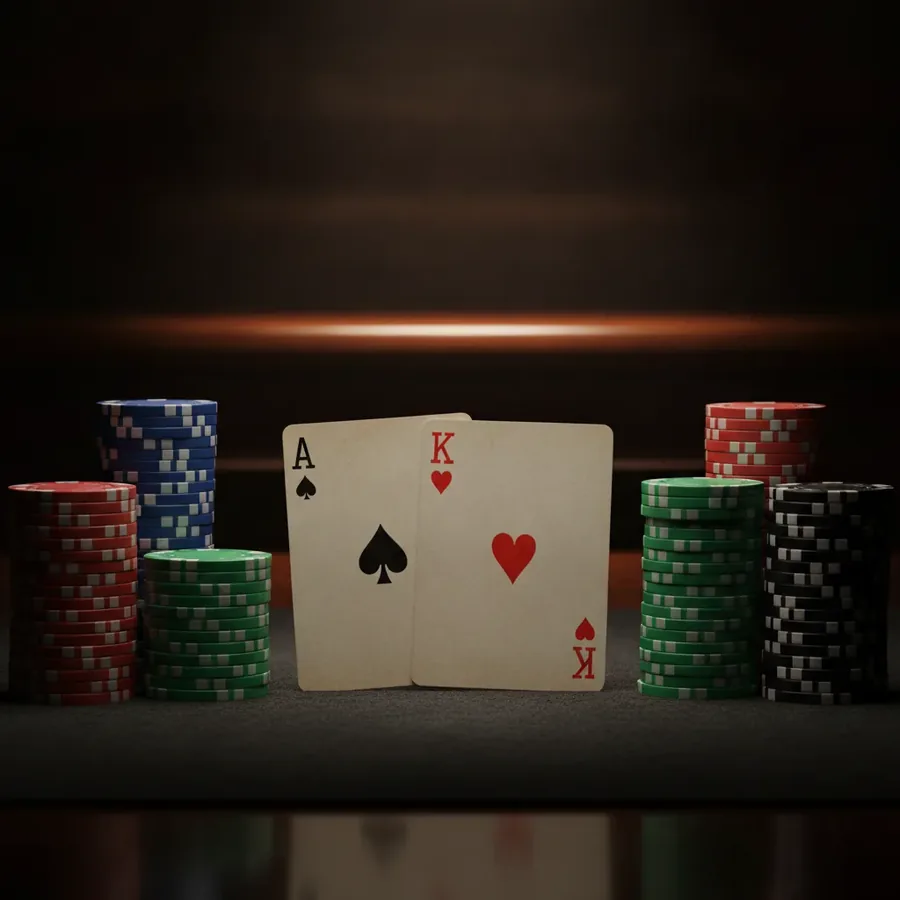
Early Surrender Is Gone From Many Tables
Late surrender, the version still found on Blackjack Surrender tables, lets the player give up the hand after the dealer has checked for blackjack and lose half the stake. That rule modifier improves RTP by about 0.08 percentage points, so a €100 stake returned at 50% costs €50 instead of the full amount. Early surrender is worth far more, up to 0.6 percentage points, but it is extremely rare and has effectively been removed from most modern tables. The 50% of the stake returned is the only payout on a surrendered hand.
Against Blackjack Liberal Vegas Strip, which combines S17, DAS, resplit and late surrender for an RTP of 99.72% and a house edge of 0.28%, the surrender rule is one of several modifiers working in the player's favour. Dropping early surrender while keeping late surrender leaves that 0.08 percentage point gain in place, but removes the much larger 0.6 percentage point benefit that early surrender would have delivered. On a €10 bet the difference between the two surrender types is small per hand, yet it compounds across thousands of rounds. The standard deviation of 1.15 on that liberal rule set shows how widely individual sessions can swing around the average.
Blackjack 6 decks with S17, DAS, DOA and a 3:2 payout reaches 99.54% RTP and a 0.46% house edge, and that rule set carries no surrender at all. The absence of surrender there costs the player the 0.08 percentage point improvement that late surrender would have added, which on €100 of stakes is about €0.08 per round on average. A player choosing between the two rule sets is effectively trading the surrender option for the slightly different deck and doubling configuration. Late surrender remains the version to look for, since early surrender has largely disappeared from the tables.
Ignoring the Basic Strategy Chart: 1 Percent Wasted
Blackjack 6 decks with S17, DAS, DOA and a 3:2 payout reaches an RTP of 99.54% and a house edge of 0.46%, but that figure assumes the player follows basic strategy on every decision. Playing by feel instead can add roughly one percentage point to the casino's edge, which on €100 of stakes is about €1 per round handed over on average. The 0.46% house edge is therefore a best-case number, not a default. Basic strategy is required to reach that figure.
Compare that with Blackjack Liberal Vegas Strip, where S17, DAS, resplit and late surrender produce an RTP of 99.72% and a house edge of 0.28%. The gap between 0.46% and 0.28% is 0.18 percentage points, and both figures already assume correct basic strategy play. A player who ignores the chart on the liberal table gives back far more than that 0.18 percentage point difference through mistakes alone. The 1.15 standard deviation on that rule set describes the natural swing around the average, not the cost of errors.
Doubling after a split is worth about 0.14 percentage points and resplitting aces about 0.08 percentage points, both of which only materialise if the player takes the correct action at the right moment. Dealer hitting soft 17 costs 0.22 percentage points, so a table with H17 and a player who also ignores the chart compounds two separate leaks. On a €10 bet the visible cost of a single wrong decision is small, but across a session the one percentage point from ignored basic strategy dominates every other rule difference. That is the single largest avoidable expense at the table.
When Can You Raise Your Bet?
Doubling down doubles the stake and draws exactly one more card, and on the 6-deck S17, DAS, DOA, 3:2 rule set the move is worth about 0.14 percentage points when it is allowed after a split. Doubling after a split improves RTP by roughly 0.14 percentage points, which on €100 of stakes is about €0.14 per round on average. The Blackjack Liberal Vegas Strip rule set includes DAS alongside S17, resplit and late surrender for an RTP of 99.72%. Without DAS the same hand would surrender that 0.14 percentage point gain.
Splitting is the other route to a larger position, and it can expand a hand into up to four separate hands, with split aces usually receiving one card each. Resplitting aces is worth about 0.08 percentage points, while doubling after a split adds about 0.14 percentage points, so the two combined account for roughly 0.22 percentage points of the return. On a €10 original bet a full split into four hands puts €40 at risk on that round. The 6-deck S17 configuration with DAS and DOA reaches 99.54% RTP and a 0.46% house edge when these options are used correctly.
Insurance is not a way to increase the bet on a strong hand: it is a separate side bet of up to 50% of the main bet, with an RTP of 92.53% and a house edge of 7.47%. On a €10 main bet the maximum €5 insurance stake costs about €0.37 per round on average at that edge. Basic strategy always declines it except for card counters at a true count of at least +3. Increasing the bet through doubling or splitting has a mathematical basis; adding insurance does not, since the 2:1 payout cannot overcome the 7.47% edge.
Splitting at a Live Table, Step by Step
The first step is to place a stake inside that 1 EUR to 2,500 EUR range, then receive the initial two cards. If the pair qualifies for a split, the player matches the original stake on a second hand, so a €10 bet becomes €20 at risk. Unlimited players can share the table, which does not change the split mechanics on the individual hand.
The second step is to check whether doubling after the split is permitted on the underlying rule set, since DAS is worth about 0.14 percentage points and resplitting aces about 0.08 percentage points. Infinite Blackjack from Evolution, with a bet range of 1 EUR to 5,000 EUR and an RTP of 99.47%, allows up to four side bets including Any Pair, 21+3, Hot 3 and Bust It, but those are separate from the split itself. On a €10 original stake a split into four hands commits €40 to the round.
The third step is to play each resulting hand according to basic strategy, because the 99.56% RTP on Lightning Blackjack and the 99.47% on Infinite Blackjack both assume correct decisions. Blackjack Party from Evolution, with a bet range of 1.00 EUR to 1,000 EUR, runs the same underlying game with two hosts, and the split rules follow the table configuration rather than the presentation. Surrender is not part of these live tables, so the 0.08 percentage point gain from late surrender is unavailable there. A player who splits and then ignores the chart gives back the 0.14 percentage point DAS gain and more.
Blackjack variants at a glance
| Variant | Payout | House edge | Rule | RTP |
|---|---|---|---|---|
| Blackjack Liberal Vegas Strip (liberal rules, 3:2) | Blackjack 3:2, win 1:1 | 0.28% | The most player-friendly rule set: S17 + DAS + resplit + late surrender. Standard deviation 1.15 | 99.72% |
| Blackjack 6 decks, S17, DAS, DOA, 3:2 payout, basic strategy | Blackjack 3:2, regular win 1:1, insurance 2:1 | 0.46% | Dealer stands on soft 17; double down on any first two cards; doubling after a split allowed; no surrender. Basic strategy is required to reach this figure | 99.54% |
| Blackjack 6:5 payout instead of 3:2 (6 decks) | Blackjack 6:5, win 1:1 | 1.85% | Replacing 3:2 with 6:5 adds exactly +1.39 percentage points to the casino's edge – more than any other rule change. On a €10 bet a blackjack pays €12 instead of €15. | 98.15% |
| Blackjack Single deck, classic rules, 3:2 | Blackjack 3:2, win 1:1 | 0.15% | Fewer decks = lower edge; one deck gives about −0.48 percentage points compared with 8 decks. Often offset by a 6:5 payout. | 99.85% |
| Blackjack Split / double / H17 – rule effects | Double – stake ×2 with one card; split – up to 4 hands; split aces usually get one card each. | H17 +0.22 percentage points; RSA −0.08 percentage points; DAS −0.14 percentage points | Dealer hitting soft 17 lowers RTP by 0.22 percentage points; resplitting aces improves it by 0.08 percentage points; doubling after a split improves it by about 0.14 percentage points; 6 decks instead of 8 – about 0.02 percentage points. | n/a (rule modifiers) |
| Blackjack Surrender (late surrender) – rule effect | 50% of the stake returned | −0.08 percentage points | The player gives up the hand after the dealer has checked for blackjack and loses half the stake. Improves RTP by about 0.08 percentage points. Early surrender is worth much more (up to −0.6 percentage points) but is extremely rare. | n/a (rule modifier) |
Calling Late Surrender Correctly in Three Steps
Late surrender has a direct RTP effect of −0.08 percentage points on the house edge, meaning the player gives up the hand only after the dealer has checked for blackjack. On a 100 EUR stake, the player loses 50 EUR and keeps the other 50 EUR instead of risking the full amount. This rule improves the return by about 0.08 percentage points compared with a table that does not offer surrender.
Step one is to wait until the dealer confirms there is no blackjack, because late surrender only becomes available after that check. Step two is to signal surrender on a hard 15 or 16 against a dealer ten or ace, which are the standard basic strategy spots where the rule carries value. Step three is to accept the 50% return of the stake, so a 100 EUR bet returns 50 EUR and the other 50 EUR stays with the casino.
Early surrender is worth much more at up to −0.6 percentage points of house edge, but it is extremely rare and is not the same rule as late surrender. The Liberal Vegas Strip rules include late surrender and produce a house edge of 0.28% with an RTP of 99.72%. A table with six decks, S17, DAS and DOA but no surrender reaches an RTP of 99.54% and a house edge of 0.46%.
Infinite Blackjack vs the Classic Seven-Seat Table
Infinite Blackjack by Evolution runs with a bet range of 1 EUR to 5,000 EUR and an RTP of 99.47%. Unlimited players can join the same table, so no seat ever blocks a new player from taking part. The game adds four side bets in Any Pair, 21+3, Hot 3 and Bust It, each of which changes the long-run return when played regularly.
The standard six-deck table with S17, DAS, DOA and a 3:2 payout reaches an RTP of 99.54% when basic strategy is used, which is 0.07 percentage points higher than Infinite Blackjack. A single-deck game with classic rules and a 3:2 payout improves further to an RTP of 99.85% and a house edge of 0.15%. The difference of 0.38 percentage points between those two blackjack products is larger than the 0.07-point gap between Infinite Blackjack and the six-deck reference table.
A classic seven-seat table limits participation to the number of open boxes, while Infinite Blackjack removes that physical cap entirely. On a 100 EUR round, the average cost at Infinite Blackjack is 0.53 EUR based on its 99.47% RTP, whereas the six-deck basic strategy table costs 0.46 EUR per 100 EUR. Lightning Blackjack sits between them with an RTP of 99.56% and a bet range of 1 EUR to 2,500 EUR.
Side Bets Raise the House Edge to 5%
Insurance on a six- to eight-deck blackjack game carries an RTP of 92.53% and a house edge of 7.47%, paid at 2:1 when the dealer shows an ace. A 100 EUR insurance stake returns 92.53 EUR on average over the long run. Basic strategy always declines this side bet except for card counters at a true count of +3 or higher.
With a single deck the insurance edge is approximately 5.88%, which is still far worse than the 0.15% house edge of a single-deck blackjack game with classic rules and a 3:2 payout. The side bet allows up to 50% of the main bet as a separate stake, so a 100 EUR main bet can trigger a further 50 EUR insurance wager. That separate wager is where the 7.47% edge applies.
Infinite Blackjack includes four side bets, and each one adds a separate house edge on top of the main game. The main game returns 99.47%, but a side bet with a house edge near 5% costs roughly 5 EUR per 100 EUR staked. A player who adds side bets to every round therefore pays a materially higher average price than the basic strategy player at 99.54% RTP.
Doubling After a Split: Which Tables Allow It
Doubling after a split, abbreviated DAS, improves the player's return by about 0.14 percentage points compared with a game that does not allow it. The six-deck reference game with S17, DAS and DOA reaches an RTP of 99.54% and a house edge of 0.46%. That DAS rule is one of the factors that keeps the house edge below the 6:5 variant.
When DAS is allowed, a split pair can become two doubled hands, each using a stake of two times the original bet and receiving one card only. On a 10 EUR original bet, doubling after a split risks 20 EUR on that hand. The player can split into up to four hands, so the total exposure can rise quickly when DAS is combined with re-splitting.
Not every table includes DAS, and the absence of the rule pushes the house edge up by 0.14 percentage points. Liberal Vegas Strip rules include S17, DAS, re-split and late surrender, producing an RTP of 99.72% and a house edge of 0.28%. A player comparing tables should check DAS alongside the 3:2 payout, because a 6:5 payout adds 1.39 percentage points to the casino edge.
One Deck vs Eight Decks: The House Edge Gap
A single-deck blackjack game with classic rules and a 3:2 payout returns an RTP of 99.85% and carries a house edge of 0.15%. Fewer decks lower the house edge, and one deck gives about −0.48 percentage points compared with eight decks. That single-deck figure is often offset by a 6:5 payout, which adds exactly +1.39 percentage points to the casino's edge.
The six-deck game with S17, DAS, DOA and a 3:2 payout reaches an RTP of 99.54% and a house edge of 0.46%, which is 0.31 percentage points worse than the single-deck classic game. Moving from six decks to eight decks adds about 0.02 percentage points to the house edge. The difference between six and eight decks is therefore small compared with the 0.48-point gap between one and eight decks.
A 6:5 payout on a 10 EUR bet pays 12 EUR for a blackjack instead of 15 EUR under a 3:2 payout. The 3:2 payout returns 150 EUR on a 100 EUR stake, while 6:5 returns only 120 EUR. The blackjack 6:5 game with six decks shows an RTP of 98.15% and a house edge of 1.85%, which is far above the 0.15% edge of a single-deck 3:2 game.
Split, Double Down and Surrender by the Numbers
Doubling after a split improves the return by roughly 0.14 percentage points, while resplitting aces adds about 0.08 percentage points and a six-deck shoe costs around 0.02 percentage points against eight decks. These rule modifiers sit on top of the base figure of 99.54% RTP for the standard six-deck game with S17 and DAS, where the house edge is 0.46%. On a €100 stake that edge costs €0.46 per hand on average, so a session of 100 hands at €100 each gives back roughly €46 to the casino over the long run.
Late surrender is worth minus 0.08 percentage points on the house edge, meaning the player gives up the hand after the dealer has checked for blackjack and takes back half the stake. Early surrender is far stronger, up to minus 0.6 percentage points, but it is extremely rare at live tables. Splitting allows up to four hands, and split aces usually receive one card each, which limits how far the stake can be multiplied on that particular rule.
Comparing rule sets shows how far the spread reaches: the liberal Las Vegas Strip variant with S17, DAS, resplit and late surrender lifts RTP to 99.72% and cuts the house edge to 0.28%, while a single-deck classic game with 3:2 pays 99.85% RTP against a 0.15% edge. Every deck removed from the shoe is worth about 0.48 percentage points compared with eight decks, though a 6:5 payout often cancels that gain.
16 vs 10 played incorrectly: most common error
Standing on 16 against a dealer 10 is the most frequent basic strategy mistake, and the cost shows up directly in the 0.46% house edge attached to the six-deck S17 game with DAS and double on any first two cards. That figure of 99.54% RTP assumes the player follows basic strategy exactly, so deviations move the return away from it hand by hand. Over 100 rounds at €10 each, the theoretical loss of €4.60 assumes no such errors.
The 6:5 payout rule compounds the damage from wrong decisions: replacing 3:2 with 6:5 adds 1.39 percentage points to the casino's edge, taking RTP from 99.54% down to 98.15% and the house edge up to 1.85%. On a €10 blackjack the payout drops from €15 to €12, a difference of €3 on a single winning hand. A player who also stands incorrectly on 16 versus 10 loses further ground on top of that rule change.
Insurance is a separate trap on the same decision tree: the side bet pays 2:1 but returns only 92.53% RTP across six to eight decks, leaving a 7.47% house edge. Basic strategy always declines insurance, with the exception of card counters at a true count of at least plus three. With a single deck the insurance edge is around 5.88%, still far above the 0.46% edge of the main game.
Continuous Shuffling Machines Reshuffle After Every Round
A continuous shuffling machine returns every card to the shoe after each round, so the deck composition never drifts the way it does in a six-deck game with a 0.46% house edge and 99.54% RTP. Because each round starts from a full shoe, card counting loses its value entirely, and the true count stays anchored near zero throughout the session. The player faces the same average edge on every hand rather than a shifting one across the shoe.
The effect on the house edge is direct: without penetration, no deck is ever rich or poor in tens and aces, so the 0.46% edge applies uniformly and the 3:2 payout on a blackjack pays €15 on a €10 stake every time it lands. In a game with a 6:5 payout the same blackjack pays only €12, and the house edge rises to 1.85% with RTP at 98.15%, a gap of 1.39 percentage points that no shuffle pattern can recover.
For a player who relies on basic strategy rather than counting, the machine changes nothing about the 99.54% figure, since that return already assumes a fresh six-deck shoe each round. Doubling after a split still adds about 0.14 percentage points and resplitting aces about 0.08 percentage points, and those gains survive the continuous shuffle because they depend on the rule set, not on deck composition. Late surrender remains worth minus 0.08 percentage points in the same way.
Double Down or Just Hit on 11
On a total of 11, doubling the stake to €20 with one card drawn is the standard play, and the six-deck S17 game with DAS and double on any first two cards returns 99.54% RTP with a 0.46% house edge when basic strategy is followed. Doubling after a split, which is permitted here, is worth about 0.14 percentage points of extra return. That makes the aggressive option the one that matches the published figure.
The comparison to a simple hit is visible in the payout structure: a blackjack pays 3:2, so €10 returns €15, while a regular win pays 1:1 and returns €10. Doubling on 11 converts a €10 stake into €20 at risk for one additional card, so a win returns €20 instead of €10, but a loss costs twice as much. Over 100 such decisions the average outcome is what the 0.46% edge measures.
Replacing 3:2 with 6:5 changes the arithmetic around the same decision: RTP falls from 99.54% to 98.15% and the house edge climbs from 0.46% to 1.85%, a swing of 1.39 percentage points. On a €10 blackjack the payout drops from €15 to €12. The liberal Las Vegas Strip rule set, with S17, DAS, resplit and late surrender, reaches 99.72% RTP and a 0.28% edge for players who still double correctly.
No Doubling Down on Three Cards
Doubling is restricted to the first two cards in the six-deck S17 game with DAS and double on any first two cards, so a three-card total cannot be doubled even when it reaches 11. That game carries 99.54% RTP and a 0.46% house edge under basic strategy, and the restriction is baked into those figures. A player who expects to double after a third card is working from a different rule set than the one priced here.
The split rules interact with this limit: up to four hands are allowed and split aces usually receive one card each, so after a split the player often holds a two-card hand that can still be doubled. Doubling after a split is worth roughly 0.14 percentage points of return. Resplitting aces adds about 0.08 percentage points, while a six-deck shoe costs about 0.02 percentage points against an eight-deck shoe.
Insurance is a separate side bet capped at 50% of the main wager when the dealer shows an ace, and it pays 2:1 but returns only 92.53% RTP across six to eight decks, leaving a 7.47% edge. Basic strategy always declines it except for card counters at a true count of at least plus three. On a €10 main bet the insurance stake of €5 wins €10, yet the long-run return stays far below the 99.54% of the underlying game.
Contact
Live - online chat
Banking









Providers












Surge Casino 2026